As India’s energy demand continues to rise and electricity costs keep increasing, more homeowners, businesses, and farmers are turning to cleaner and more cost-effective energy alternatives. One of the most practical and efficient solutions available today is the on-grid solar system—a setup that allows homes, commercial spaces, institutions, and agricultural operations to generate their own electricity while staying connected to the utility grid.
This system is ideal for locations with reliable grid connectivity and for users who want to reduce electricity bills without the need for large battery storage systems. But what exactly is an on-grid solar system, how does it work, and is it the right solution for your energy needs?
This guide will walk you through everything you need to know—from components and benefits to customization and installation tips—so you can make an informed decision for your energy future.
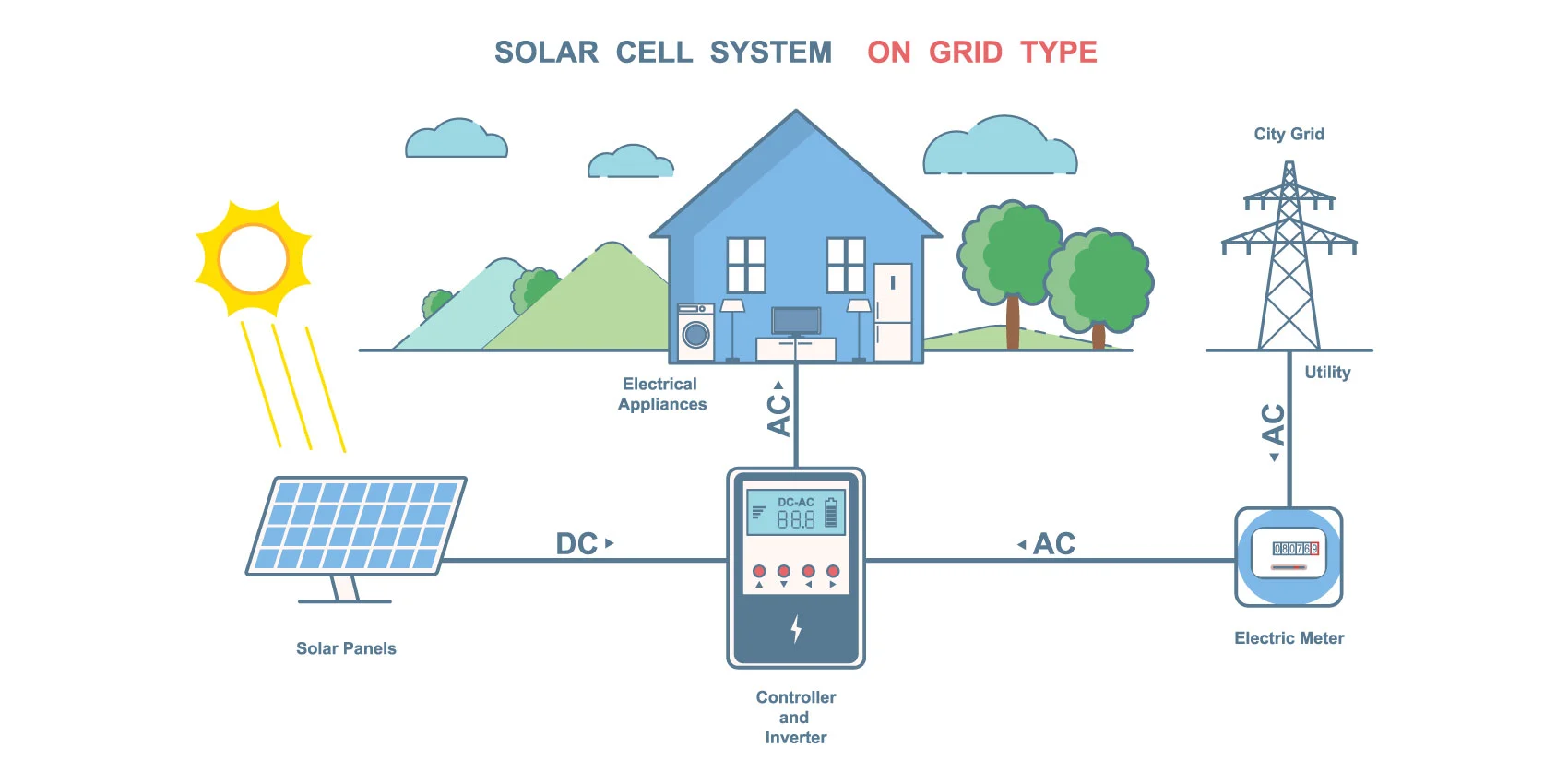
An on-grid solar system, also known as a grid-tied solar power system, is a solar energy setup that is directly connected to the main electricity grid. It generates electricity using solar panels and supplies power to your home, farm, office, or business during the day. Any excess electricity generated can be exported back to the grid through net metering, helping you reduce your overall electricity costs.
Unlike off-grid systems, on-grid systems do not typically require battery storage, which makes them more affordable and easier to maintain. These systems are ideal for users who already have access to the utility grid and want to lower their energy bills while using clean and renewable power.
They are especially useful for urban homes, commercial buildings, institutions, industrial facilities, and farms with regular daytime electricity usage.
An on-grid solar system operates through the coordinated function of several essential components:
Capture sunlight and convert it into direct current (DC) electricity.
Converts the DC electricity produced by the solar panels into alternating current (AC), which is used by most residential, agricultural, and industrial appliances.
Measures the electricity imported from and exported to the utility grid. This allows users to receive credits for surplus solar power sent back to the grid.
Acts as a backup power source when solar generation is low, such as during nighttime or cloudy weather.
Support the solar panels and ensure safe system operation through proper wiring, protection devices, and distribution setup.
When the solar panels generate electricity during the day, that power is first used to meet your immediate energy needs. If your system produces more electricity than you consume, the extra power is sent back to the grid. If your energy demand exceeds solar generation, your property automatically draws the remaining power from the utility supply.
This ensures a smooth and reliable power experience while significantly reducing your monthly electricity bills.
On-grid solar systems offer several major advantages, especially in the Indian context where electricity tariffs and daytime power demand continue to grow.
One of the biggest benefits of an on-grid system is the significant reduction in monthly electricity costs. By generating your own power during the day, you consume less from the grid.
Excess solar electricity can be exported to the grid, allowing you to earn credits and offset future electricity consumption.
Because on-grid systems generally do not require batteries, they are more affordable compared to off-grid or hybrid systems.
Solar energy is clean, renewable, and sustainable. Every unit of solar power generated reduces dependence on fossil fuels and lowers carbon emissions.
Orient Solar offers tailored on-grid solar solutions based on your load requirements, available roof space, and operational needs—whether for a house, office, commercial unit, or agricultural application.
For areas with stable grid access, on-grid systems are an efficient way to cut costs while maintaining uninterrupted energy support from the grid whenever needed.
On-grid solar systems are particularly useful for farmers, cold storage facilities, processing units, schools, hospitals, and businesses with high daytime electricity usage.
One of the strongest advantages of an on-grid solar system is that it can be custom-designed based on the user’s electricity usage pattern, property type, and budget.
Residential on-grid systems can be designed based on monthly electricity consumption, rooftop area, appliance usage, and family size. Homeowners can choose compact rooftop systems for daily bill savings.
Commercial solar systems can be optimized for office spaces, showrooms, hotels, warehouses, clinics, and institutions with higher daytime power usage. These setups help reduce operational costs and improve energy efficiency.
Farmers can benefit greatly from on-grid solar by powering irrigation pumps, borewell systems, farm lighting, dairy operations, storage spaces, and processing units. Custom solar sizing helps match farm operations while reducing dependence on costly electricity and diesel-based alternatives.
Factories and production units can deploy larger on-grid systems to reduce peak electricity expenses and improve long-term energy cost control.
Orient Solar ensures that every system is engineered according to your actual load profile, ensuring maximum output, savings, and return on investment.
On-grid solar systems are highly versatile and suitable for a wide range of applications across India.
Perfect for urban and semi-urban homes with regular electricity access. Homeowners can significantly cut their monthly utility bills by using solar power during the day.
Shops, offices, educational institutions, and healthcare centers can reduce their energy costs and improve sustainability with rooftop on-grid solar systems.
From powering irrigation systems to supporting dairy and post-harvest operations, on-grid solar is becoming a practical energy solution for modern farms.
Retail stores, workshops, service centers, and local enterprises can benefit from reduced operating costs and long-term energy savings.
Manufacturing units and processing plants with high energy consumption can use on-grid solar to optimize energy expenses and improve profitability.
Orient Solar is a trusted name in India’s renewable energy sector, offering complete solar solutions tailored to residential, agricultural, commercial, and industrial requirements.
Years of hands-on experience in designing and implementing on-grid solar systems across India.
Our systems use advanced solar panels, efficient inverters, durable mounting structures, and reliable electrical components.
We evaluate your energy consumption, site conditions, roof space, and budget to design the right on-grid solar solution for your property.
From site assessment and installation to system commissioning and after-sales support, Orient Solar provides complete end-to-end assistance.
A strong service and dealer network ensures prompt support and reliable service across different regions.
Getting started with an on-grid solar setup is simple when you follow these essential steps:
Review your electricity bills and estimate your monthly and daily power consumption. This helps determine the right system capacity.
Choose solar panels, inverter type, and mounting systems based on your site conditions, electricity goals, and budget.
Ensure your rooftop or installation area gets maximum sunlight with minimal shading throughout the day.
Apply for the required approvals and net metering process as per your local electricity distribution company guidelines.
Hire trained professionals like the team at Orient Solar for safe, compliant, and efficient installation.
Regular panel cleaning and routine system checks help maintain performance and maximize long-term energy savings.
The cost of an on-grid solar system in India generally depends on system size, panel technology, inverter capacity, and installation requirements. On average, prices can range from ₹60,000 to ₹5,00,000 or more, depending on whether the system is for a home, business, or larger commercial application.
Because on-grid systems do not usually include batteries, they are often more affordable than off-grid alternatives. In many cases, government subsidy programs and net metering policies can further improve the return on investment.
The payback period usually ranges between 3 to 6 years, depending on electricity usage and tariff rates, while long-term savings can be substantial over the system’s lifetime.
Orient Solar also offers flexible project consultation and customized solar solutions based on your budget and energy requirements.
If you already have access to the utility grid and want to reduce your electricity bills while switching to a cleaner energy source, an on-grid solar system is a smart and cost-effective choice. It offers long-term savings, lower dependency on conventional power, net metering benefits, and a more sustainable way to meet your daily energy needs.
Whether you are a homeowner, business owner, institution, or farmer, on-grid solar can help you achieve greater energy efficiency and better financial returns.
Orient Solar is committed to delivering high-performance on-grid solar systems backed by expert design, reliable components, and professional support.
Make the switch today to a smarter, cleaner, and more cost-effective energy future with Orient Solar—India’s trusted name in solar power solutions.
Frequently Asked Question
Request A Quote